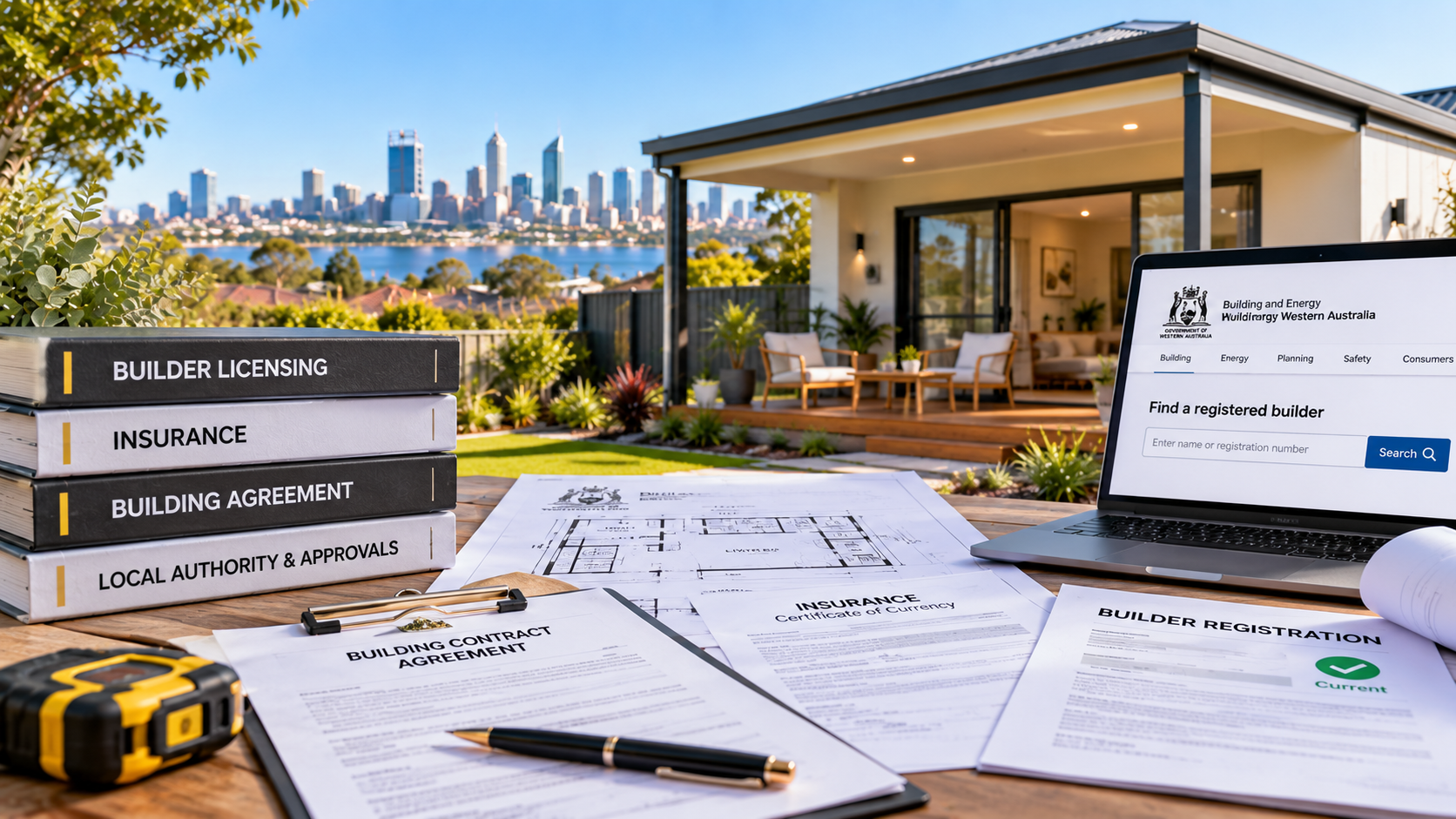
A granny flat is one of the biggest things you will ever build on your own block. It sits metres from your house, it usually houses someone you care about or earns you rent, and it absorbs a serious amount of money before anyone hands over a set of keys. That is why the paperwork deserves as much attention as the floor plan. Confirming that a licensed granny flat builder Perth is genuinely registered and properly insured takes an afternoon of checking, and it is far simpler than chasing an unregistered operator later.
This is a practical checklist for homeowners in Perth’s northern suburbs who are comparing builders and want to know what to ask for, what to look at, and what should make them walk away.
Why the checks come before the deposit
Most problems with a granny flat build do not appear on the day you sign. They appear months later, as cracked slabs, leaking wet areas, unfinished site works, or a builder who stops answering the phone. At that point, your options depend almost entirely on who you contracted with and what cover was in place.
Building work in Western Australia is regulated, and certain residential work must be carried out by a registered builder. Requirements and thresholds do change over time, so confirm the current rules with the relevant WA building regulator before you commit. The good news is that verification is straightforward once you know the three things to look at: the licence, the insurance, and the name on the contract.
What “licensed” actually means for a granny flat builder
A building licence is not a logo you print on a website. It is a registration held by a specific person or business, with a registration number, and it is recorded on a public register that you can search yourself. A licensed granny flat builder in Perth should be able to give you that number without hesitation and without a follow-up email.
Ask for the number, then check it yourself
Do not rely on a badge on a ute, a testimonial page, or a claim of decades in the trade. Ask for the registration number directly and look it up on the official register. While you are there, check that the registration is current, that the categories or classes of work cover residential construction, and that the name on the register is the same entity you are dealing with.
Match the names across every document
A builder may trade under a business name while the registration sits with an individual or a company. That is normal, but the names need to line up. Compare the registered name and number against the quote, the contract, the insurance certificate, and the invoice. If a sales company is quoting you while a different entity holds the registration and signs the contract, ask who is legally responsible for the work and get the answer in writing.
It’s also worth noting that most licensed granny flat builder Perth started as registered and licensed builders within the residential home sector before they entered the granny flat niche, either as an add-on product or service offering or by specialising in just building granny flats.
Confirm who is actually on site
Builders use subcontractors, which is standard practice. Ask which trades will be subcontracted, how those trades are licensed for their part of the job, and who supervises them. A registered builder who is present through the build, rather than someone who appears at handover, gives you a much clearer point of accountability.
Insurance: ask for certificates, not assurances
Insurance is where a lot of homeowners get vague answers. Push for documents. A certificate of currency should show the policy type, the insured party, the cover amount, and the policy period. If the period does not cover your build dates, ask for an updated certificate before work begins.
Home indemnity insurance applies to certain residential building work in WA, and whether it applies to your project depends on factors including the value and nature of the work. Confirm the current requirements with the relevant WA authority, and then confirm in writing who is arranging the cover for your job. Beyond that, ask about:
Public liability cover, which responds if someone is injured or property is damaged during the build
Contract works or construction cover for the structure while it is going up
Workers compensation for anyone employed on your site
Cover for subcontractors, and whether their policies sit alongside the builder’s
Also check the insured party on each certificate. Cover held by a related but different company may not respond to a claim against the entity that signed your contract.
Business registration and the basics
Licensing and insurance get the attention, but the simple business checks catch a surprising number of problems. Ask for an ABN, a business name registration, and a physical business address. Some Perth granny flat builders operate showrooms, including in Joondalup and Canning Vale, which gives you somewhere to visit and a fixed point of contact. Others work from a home office, which is fine, as long as the address and details are consistent across every document you receive.
References are worth more than reviews. Ask for two or three recent local projects, ideally in suburbs near you such as Yanchep, Joondalup, Ocean Reef, Hillarys, Quinns Rocks, Mullaloo or Wanneroo, and ask whether you can drive past. A builder with happy clients nearby will usually say yes.
If you want to reduce your build risk tehn ensure you have a licensed granny flat builder Perth
Questions to put in writing before you sign
What is your builder registration number, and in whose name is it held?
Which insurance policies cover this project, and can you send certificates of currency?
Who signs the contract, and is that the same entity that holds the registration and insurance?
What exactly is excluded from the quote, including site works, connections, fencing, demolition and landscaping?
How are variations priced and approved?
What is the payment schedule, and what is each payment tied to?
Who is my day-to-day contact during the build?
What happens if the build runs past the estimated completion date?
Get the answers in writing, even if you also discussed them on the phone. A builder who is comfortable putting detail in writing is usually a licensed granny flat builder who is comfortable being held to it.
Warning signs worth taking seriously
Some behaviours show up again and again when a project goes wrong. Treat these as reasons to slow down rather than reasons to shop harder on price.
No registration number offered, or a number that cannot be found on the register
Reluctance to provide insurance certificates or a written contract
A large cash deposit requested before any documentation is signed
A quote with no site visit and no allowance for site conditions
Pressure to sign quickly because a price is about to expire
Prices far below every other quote you have received
Different business names appearing on the quote, the contract and the invoice
Comparing Perth granny flat builders fairly
Advertised pricing in the Perth market varies widely, and it is rarely an apples-to-apples comparison. Some builders publish starting figures in the range of roughly $171,000 for a one-bedroom design and roughly $184,000 for a two-bedroom design. Others advertise six-month build times using steel frame construction. In community discussions, Perth homeowners have reported builds of around $190,000. Experience claims also range from a few decades to more than seventy years in the industry.
None of those numbers tell you what your build will cost, because they exclude different things. Use them as a prompt to ask what is included, and compare quotes line by line instead of headline to headline.
What to compare | What a thorough answer looks like |
|---|---|
Registration | A number you can verify on the official register, matching the contracting entity |
Insurance | Certificates of currency issued for your project period |
Quote inclusions | Itemised site works, connections, approvals and finishes rather than a lump sum |
Timeline | Stated start and completion expectations with the assumptions behind them |
Local proof | Recent nearby projects you can view, and referees who will take a call |
Where to find a licensed granny flat builder Perth
Start by asking friends or neighbours who have already built a granny flat, since they can share firsthand experience with a licensed granny flat builder Perth. A personal referral often tells you more than any advertisement.
Search local directories listing builders who specialise in small homes, transportable buildings and granny flats, then check each name against the WA Building Services Board register.
How Freedom Granny Flats approaches the paperwork
Freedom Granny Flats designs and builds custom granny flats and small secondary dwellings across Perth’s northern suburbs. The business is owned and run by licensed builder and carpenter Adam Jennings, drawing on more than 30 years of building experience, with designs ranging from 32 to 70 square metres across six plans: Nautical, Reef, Driftwood, Coastal, Dune and Sunset.
The build process runs in three steps. It starts with site analysis, moves into a quote and proposal, and finishes with handover. If you are weighing up options, ask for registration details, insurance documentation and references up front. Any builder worth contracting with will expect the question and answer it directly.
Frequently Asked Questions
How do I check if a Perth granny flat builder is licensed?
Ask for the builder registration number and the name it is held in, then search the official register yourself rather than relying on website badges. Check that the registration is current and covers residential construction, and confirm the registered name matches the entity on your contract. If the details do not line up, ask why before you pay anything.
What insurance should a granny flat builder have?
Ask for certificates of currency covering public liability, contract works while the build is underway, and workers compensation for anyone employed on site. Home indemnity insurance applies to certain residential work in WA, so confirm the current rules with the relevant authority and check who is arranging cover for your job. The insured party should match your contract.
Do I need council approval for a granny flat in Perth?
Approval requirements depend on your local government area, your block, and the specifics of the dwelling, so there is no single answer that fits every property. Confirm the current rules with your local council and the relevant WA building authority early, and ask your builder who is responsible for preparing and lodging any approvals before work starts.
Should I pay a deposit before I have seen a contract?
No. A deposit should follow a written contract that sets out scope, inclusions, exclusions, the payment schedule, and what each payment is tied to. Get insurance certificates and registration details at the same time. If a builder wants money before documentation, that is a strong signal to pause and ask more questions.
Can I use a builder from outside my suburb?
Yes, and plenty of Perth builders work across multiple local government areas. What matters more is whether they know your area’s soil, site conditions and approval processes, and whether they have recent projects nearby you can inspect. Local knowledge and a verifiable record matter more than a postcode.